
The Project Closet: Turning “I’m Bored” into Purposeful Learning

Written by: Stephanie Dikkers, Portals Curriculum Writer
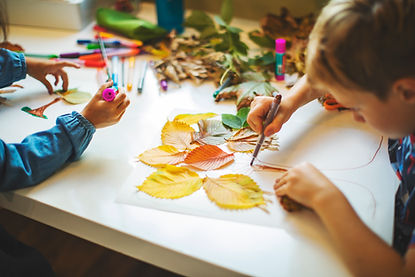
Your kids have just finished their schoolwork for the day and now they’re looking at you with that familiar expression: What’s next? Meanwhile, dinner needs to be started, laundry is waiting, and tomorrow’s lessons still need planning. You want them engaged—not glued to a screen, not wandering aimlessly—but genuinely growing while you finish what needs to be done.
Enter the Project Closet.
The project closet was one of the best practical decisions my husband and I made in our Home Education journey. It became our secret weapon for cultivating creativity, independence, and hands-on learning—without adding more to our daily teaching load.
Here’s how it works.
Choose a closet in your home that’s easily accessible. For us, it was a hallway closet that everyone could reach without asking permission every five minutes. Then fill it thoughtfully—and let the adventure begin.
What Goes in a Project Closet?
The sky really is the limit. Start with a consistent foundation of basic creative supplies:
Construction paper in multiple colors
Paint, brushes, glue, scissors, canvases
Embellishments like glitter, pipe cleaners, craft sticks, jewels, and stickers
These basics alone can spark hours of invention.
From there, customize for your children’s interests. As your children age, their interests will grow too. The magic of the project closet is that it isn’t generic—it’s personal. Think about what excites each child and stock accordingly:
Embroidery floss and a book on friendship bracelets
Learn-to-knit or crochet supplies
Soapmaking or candle kits
A small engine model or mechanical kit
A flint-and-steel kit for learning to light a fire
Fishing gear
A butterfly net
Model cars or woodworking kits
The goal is not just busyness—it’s exploration. When children have access to tools that invite experimentation, they begin developing skills, patience, and confidence. They move from consuming entertainment to creating something of their own.
Keep It Fresh
One of the keys to a successful project closet is variety. We refreshed ours monthly. When children open the door and see something new, it reignites curiosity. Novelty has power. It whispers, Try this. Build that. Learn something different.
You can even align the closet with seasons:
March: kites and outdoor exploration gear
April: rain boots, ponchos, puddle projects
May: seeds, garden trowels, buckets, and planting guides
This subtle rhythm teaches children to pay attention to the world around them. It makes learning seasonal, embodied, and alive.
Why It Works
The project closet accomplishes something important: it gives children ownership of their time.
Instead of asking, “What should I do?” they begin asking, “What could I try?” That shift is powerful. It cultivates initiative.
It also supports long-term development. Many adult passions begin as childhood experiments. A knitting kit may awaken a love for textiles. A simple engine project might ignite mechanical curiosity. A garden trowel may grow into an interest in agriculture or environmental science.
When we give children tools instead of constant instruction, we invite them into self-directed discovery.
Let Them Help Build It
As your children grow, invite them into the process. Take them to thrift stores, craft stores, flea markets, or hardware store clearance bins. Give them a modest budget and ask them to choose something they think their sibling would enjoy. Not only does this foster creativity, but it also cultivates generosity.
Philippians 2:4 reminds us to look “not only to [our] own interests, but also to the interests of others.” A project closet can quietly train that mindset. When children think about what might bless someone else, they learn to see beyond themselves.
Older students can even take responsibility for organizing and rotating items. This builds planning skills and stewardship.
It’s More Than a Closet
The project closet is not about filling time. It’s about forming habits.
It teaches:
Creativity
Perseverance
Problem-solving
Seasonal awareness
Generosity
Independent initiative
And perhaps most importantly, it creates space for productive boredom. In a world that constantly feeds children entertainment, a project closet says: You have the tools. Now imagine.
There will always be voices telling you what education must look like. More tests. More worksheets. More structure. But some of the most meaningful growth happens in unstructured, hands-on exploration.
So the next time your children finish their lessons and ask what’s next, smile—and point to the closet.
You may be surprised at what waits inside!


Comments